Senior Mechanical Engineer / Product Design + Development

I turn ambitious product ideas into hardware teams can build, test, and scale.

I move physical-product programs from ambiguity to controlled execution—defining requirements, structuring architecture, resolving the physics, creating the design, building the evidence, and coordinating the interfaces that determine performance, cost, reliability, and manufacturability.

North County San Diego. Open to senior, staff, and technical-lead opportunities plus select consulting engagements.

Animated exploded product architectureFive coordinated layers of a compact electromechanical product separate into an exploded view: front enclosure, user interface, circuit assembly, structural carrier, and rear enclosure.
One product. Every constraint connected.User · engineering · manufacturing · validation
8+ yearsMechanical engineering + product development
5 yearsHigh-reliability aerospace R&D
Since 2023Independent product consulting
B.S.M.E. + CSWPEngineering foundation + CAD certification
Full lifecycleDefinition through controlled release

What I bring to a team

Senior-level judgment that stays connected to the hardware.

The strongest contribution of a senior engineer is not simply more geometry. It is better problem framing, better technical decisions, faster learning, and reliable ownership from the first assumption through the released definition.

For employers

A hands-on engineer who can own difficult workstreams, raise the quality of decisions, and operate across engineering, product, manufacturing, suppliers, and leadership.

For clients

Direct senior capacity that can define the work, execute the engineering, expose risk early, and leave behind a product and technical record the organization can continue using.

Review experience and technical scope
01

Frame the right problem

Turn incomplete product intent into use cases, requirements, interfaces, constraints, credible alternatives, and a risk-led development plan.

Decision-ready product definition
02

Resolve the whole system

Connect user experience, mechanisms, structures, thermal and fluid behavior, electronics packaging, manufacturing, cost, and service instead of optimizing one part in isolation.

A coherent product architecture
03

Make decisions defensible

Use first-order physics, CAD, tolerance analysis, FEA or CFD, prototypes, and targeted tests at the level of fidelity the decision actually requires.

Evidence-bounded engineering choices
04

Stay with the details

Carry the reasoning into parametric geometry, materials, interfaces, GD&T, drawings, BOM structure, supplier reviews, inspection, and controlled release.

Buildable, inspectable definition
05

Improve what already exists

Diagnose failure, cost, reliability, performance, assembly, or service problems without quietly transferring risk somewhere else in the product.

Corrective direction with system awareness
06

Lead across boundaries

Communicate assumptions and tradeoffs clearly, align cross-functional stakeholders, preserve decision history, and keep technical work connected to program priorities.

Faster execution with less ambiguity

Product design + development

The whole product—not just the part.

Exceptional hardware comes from treating user needs, industrial-design intent, engineering, manufacturing, validation, and business constraints as one development system.

01

Discover + Define

Align user needs, business goals, use cases, product requirements, constraints, and the evidence required to make the next decision.

02

Architect

Structure the product, interfaces, technologies, and mechanical concepts. Compare credible directions before detail makes change expensive.

03

Design

Resolve mechanisms, housings, ergonomics, surfaces, packaging, materials, fastening, tolerances, assembly, and service as one system.

04

Prototype

Build the minimum useful prototypes—from fast fit studies to functional hardware—and use each iteration to answer a defined question.

05

Validate

Test performance, reliability, environmental exposure, misuse, usability, and critical interfaces against explicit acceptance criteria.

06

Industrialize

Complete DFM/DFA, drawings, BOM structure, supplier reviews, inspection planning, pilot-build support, and production change control.

Design standard

Every choice should improve the product as a whole: how it works, feels, assembles, survives, costs, ships, services, and scales.

Explore the full capability

Experience outline

Broad product experience, backed by rigorous mechanical depth.

The categories vary. The responsibility is consistent: understand the product, resolve the system, and leave the team with a design it can build and improve.

2018–2023

Aerospace + advanced communications

Owned mechanical design and analysis details in cross-functional R&D, developing high-reliability hardware under coupled thermal, vibration, structural, modal, packaging, manufacturing, and configuration constraints.

2023–Present

Independent product development

Translate incomplete ideas and physical interfaces into architectures, parametric CAD, calculations, prototypes, simulation, drawings, and supplier-ready technical packages across a wide range of products.

2025–Present

Advanced equipment development

Lead complex electromechanical workstreams from requirements and architecture through detailed design, reviews, release, supplier coordination, troubleshooting, and validation planning.

Review Full Experience
01

Consumer + human-centered products

Ergonomics, body-fit and freeform geometry, intuitive interfaces, durable touchpoints, product-family logic, and practical user assembly.

02

Electromechanical products

Displays, electronics, power components, thermal paths, cable routing, enclosures, sealing, fastening, assembly, and service access.

03

Industrial + performance hardware

Mechanisms, structures, flow paths, thermal behavior, acoustics, harsh environments, maintainability, and supplier-ready fabrication.

04

Aerospace + high-reliability systems

Coupled structural, thermal, vibration, modal, packaging, configuration, documentation, and cross-disciplinary interface constraints.

Where I add leverage

Resolve the decisions that determine whether the product succeeds.

The best engineering work makes the product clearer, the learning faster, and the path to production less fragile.

P-01

The product opportunity is clear, but the requirements and architecture are not.

I translate intent into use cases, measurable requirements, system boundaries, concepts, and a development plan the team can act on.

P-02

Form, function, cost, and manufacturing are pulling the design in different directions.

I connect industrial-design intent with mechanical performance, packaging, materials, assembly, service, and production realities.

P-03

The prototype proves the idea, but it is not yet reliable, repeatable, or scalable.

I identify the risks that separate a promising build from a production product, then structure the next design and validation loops around them.

P-04

A mature product needs better performance, lower cost, or a decisive failure resolution.

I isolate the real drivers, compare corrective options, and improve the design without quietly shifting risk into reliability or service.

Specialist depth

Advanced tools, applied in service of the product.

CAD, surfacing, analysis, reconstruction, and prototyping matter when they sharpen a decision, reduce risk, or move the hardware closer to a successful release.

Controlled freeform surface continuityA symmetric freeform canopy with explicit boundaries, coherent isoparametric curves, a central G2 seam, and continuous reflection bands.FREEFORM CAD / CONTINUITY + REFLECTION CONTROLG2SYMMETRY / CONTROLLED SEAMCONTROL NET + BOUNDARIESCONTINUOUS REFLECTION FLOWNO KINKS · NO ORPHAN EDGES · NO DISCONNECTED PATCHESPRODUCT GEOMETRY / 01

Surface + Product Geometry

Freeform surfaces, body-fit geometry, reflection quality, gaps, interfaces, and manufacturing-aware product definition.

Explore capability
Additive fixture with controlled interfacesA printed fixture base with four heat-set inserts, two dowel locators, a removable machined nest, and exact projected alignment lines.ADDITIVE PROTOTYPE / DATUMS + INSERTS + FIT-CHECK NESTDATUM A / PRINTED BASE PLANE4X HEAT-SET INSERT + MATCHED CLEARANCE2X DOWEL LOCATORMACHINED NEST REMOVES VERTICALLY · SIX PROJECTED INTERFACES REMAIN COINCIDENTPROTOTYPE / 02

Additive Prototyping

Functional prototypes, fit-check models, insert strategy, fixtures, and disciplined build-test-learn iteration.

Explore capability
Synchronized twin-screw lift architectureA controlled front-elevation schematic showing two guided lead screws driven one-to-one by a continuous cross shaft and paired bevel gears.KINEMATIC ARCHITECTURE / CONTROLLED SCHEMATICAPPLIED LOADMANUAL INPUTCONTINUOUS 1:1 CROSS-SHAFTBEVEL PAIR ABEVEL PAIR BTWO SCREWS · FOUR GUIDES · ONE CONSTRAINED VERTICAL DOFMECHANISMS / 03

Mechanisms + Precision Motion

Motion architecture, force paths, bearings, gears, guides, linkages, actuation, holding behavior, and wear.

Explore capability
Qualitative equipment-frame deformation and stress responseA wide symmetric equipment frame is restrained at two mounting feet and bends under a distributed center payload. Deflection increases at midspan while stress intensifies around the support transitions.STRUCTURAL RESPONSE / SYMMETRIC EQUIPMENT FRAMEDISTRIBUTED PAYLOADTWO FIXED MOUNTING FEET · MIDSPAN DEFLECTION AMPLIFIEDSUPPORT STRESSSYMMETRIC RESPONSEQUALITATIVE RESPONSE · NOT REPORTED SOLVER MAGNITUDESANALYSIS / 04

Structural Analysis + FEA

Load paths, restraints, stiffness, stress, fatigue, vibration, and simulation with explicit assumptions and checks.

Explore capability
Matched mesh-to-CAD reconstructionOne common housing is split at a shared datum, with a triangular source mesh on the left and clean controlled CAD geometry on the right.RECONSTRUCTION / SAME GEOMETRY · SAME INTERFACESSHARED DATUM ASOURCE MESHCONTROLLED CADBORES · MOUNTING FEET · ENVELOPE · DATUMS REMAIN COINCIDENTRECONSTRUCTION / 05

Mesh to Design-Intent CAD

Supplied mesh reconstruction, interface recovery, deviation-aware decisions, and clean parametric geometry.

Explore capability
Absorptive exhaust silencer cutawayA straight-through perforated core inside an absorptive packed annulus, with unidirectional flow, pressure decay, and an axial thermal expansion allowance.THERMOFLUID + ACOUSTIC ARCHITECTURE / SECTION A-AAXIAL GROWTH ALLOWANCEINLETOUTLETSTRAIGHT-THROUGH PERFORATED CORE · ABSORPTIVE PACKING ANNULUSFLOW REMAINS OPEN · ACOUSTIC ENERGY COUPLES THROUGH PERFORATIONSTHERMOFLUIDS / 06

Flow, Thermal + Acoustics

Pressure loss, velocity, heat, expansion, acoustic treatment, packaging, and manufacturable internal flow paths.

Explore capability

Conceptual engineering schematics · not client hardware, analysis results, or project evidence

Representative product terrain

Different products. The same standard of execution.

Experience spans consumer, commercial, industrial, automotive, biomechanical, electromechanical, and aerospace hardware. These anonymized summaries show the range without exposing client identities or proprietary geometry.

PF-01Mechanisms + platforms

Manual Lift, Tilt + Adjustment Systems

Design mandateUnify lift, tilt, guidance, holding, and safeguarding around a controlled mechanical platform.

Synchronized screw-drive platforms, thrust-bearing load paths, guided telescoping structures, guarded motion, hand-crank inputs, and variant-specific tilt architectures developed toward supplier-controlled definition.

Motion architectureLoad pathsSupplier release
PF-02Thermofluids + acoustics

High-Temperature Exhaust + Acoustic Systems

Design mandateBalance attenuation, pressure loss, hot-gas behavior, thermal growth, fabrication, and service access.

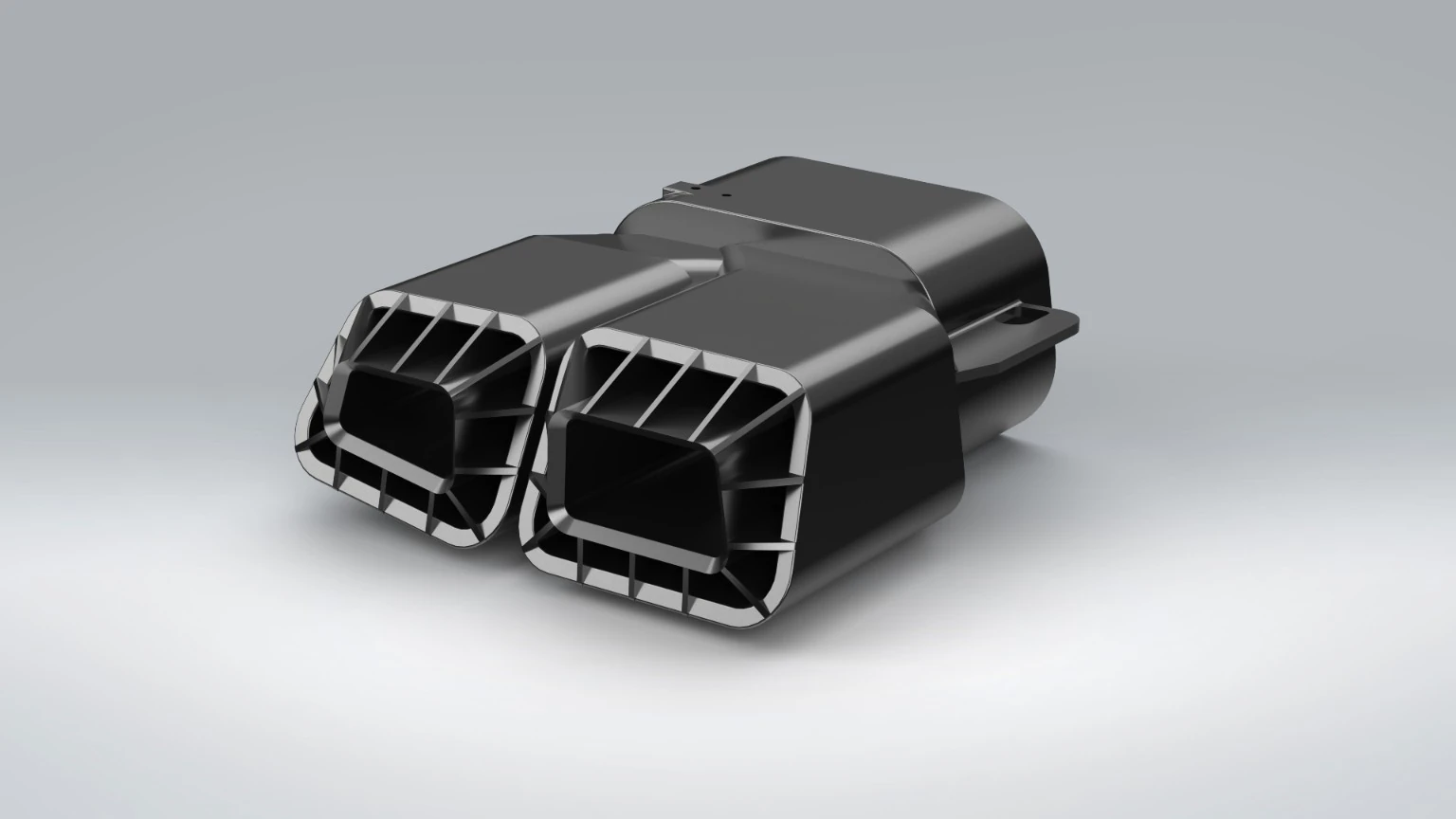
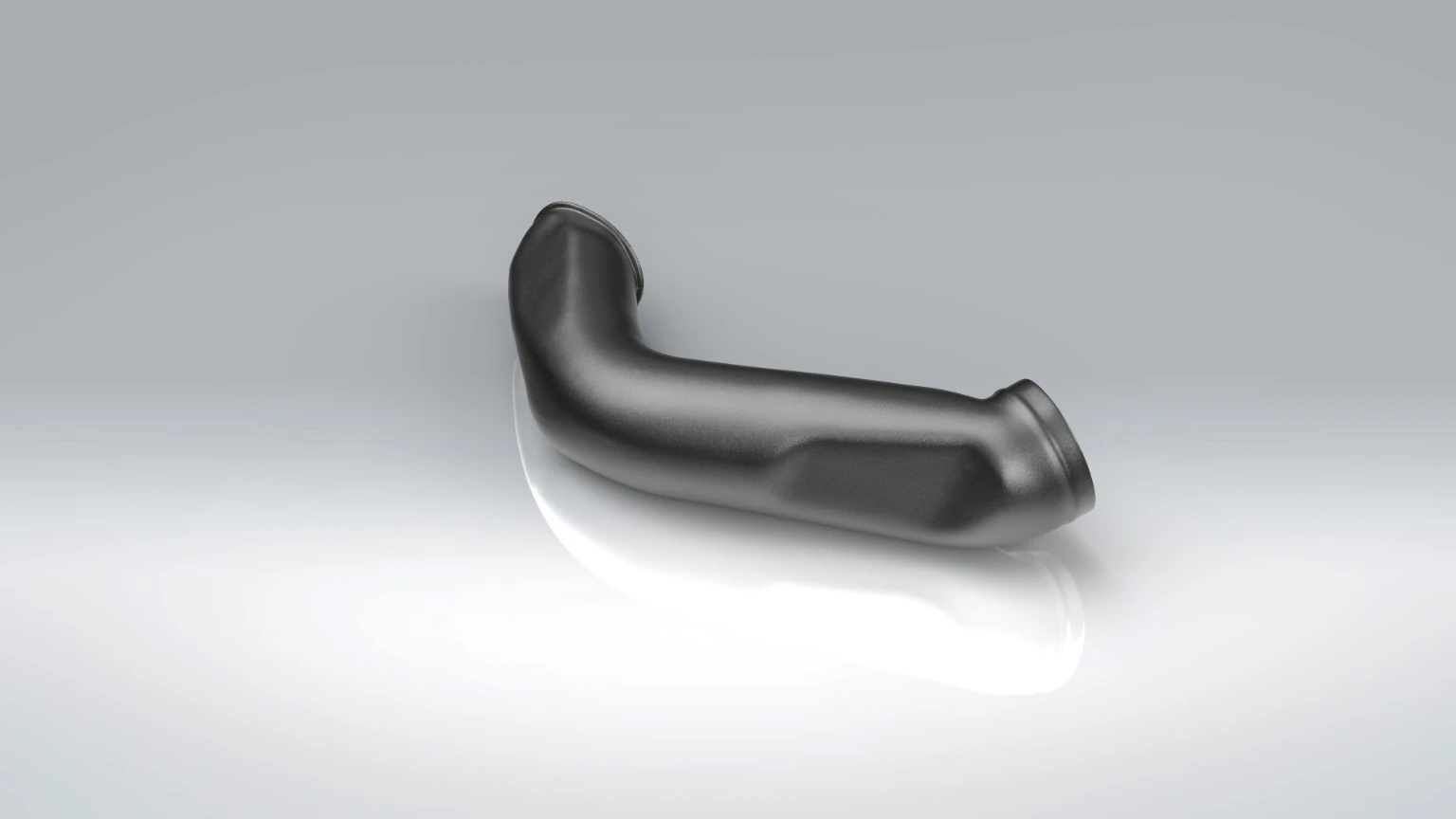
Large-flow silencer and duct architectures balanced across acoustic attenuation, engine backpressure, hot-gas velocity, thermal expansion, packaging, drainability, service access, and fabrication constraints.

CFDBackpressureFabrication
PF-03High-pressure R&D

Pulsation-Control Pressure Hardware

Design mandateCreate a credible pressure-boundary and flow-path architecture that can advance through staged validation.

Concept development for high-pressure discharge damping, including pressure-boundary architecture, modular labyrinth flow paths, closure and preload options, structural and fluid analysis, prototype planning, and hydrostatic-test strategy.

Concept R&DPressure boundaryTest strategy
PF-04Electromechanical products

Brewing + Process-Control Equipment

Design mandatePackage power, control, wiring, thermal access, assembly, and service into one manufacturable product.

Touchscreen controller packaging spanning dual-voltage product architecture, power and relay integration, protective devices, internal supports, cable management, thermal access, serviceability, and additive enclosure production.

EnclosuresPower packagingDFA
PF-05Precision mechanisms

Retention, Ratcheting + Locking Systems

Design mandateRecover the mechanism intent, then control engagement, retention, wear, tolerance, and assembly risk.

Physical-hardware evaluation and parametric reconstruction of compact locking mechanisms, with emphasis on pin retention, engagement geometry, tolerance sensitivity, assembly sequence, wear paths, and robust corrective architecture.

Mechanism recoveryToleranceReliability
PF-06Automotive product development

Vehicle Surfaces + Performance Hardware

Design mandatePreserve surface quality and vehicle fit while resolving fastening, airflow, heat, and manufacture.

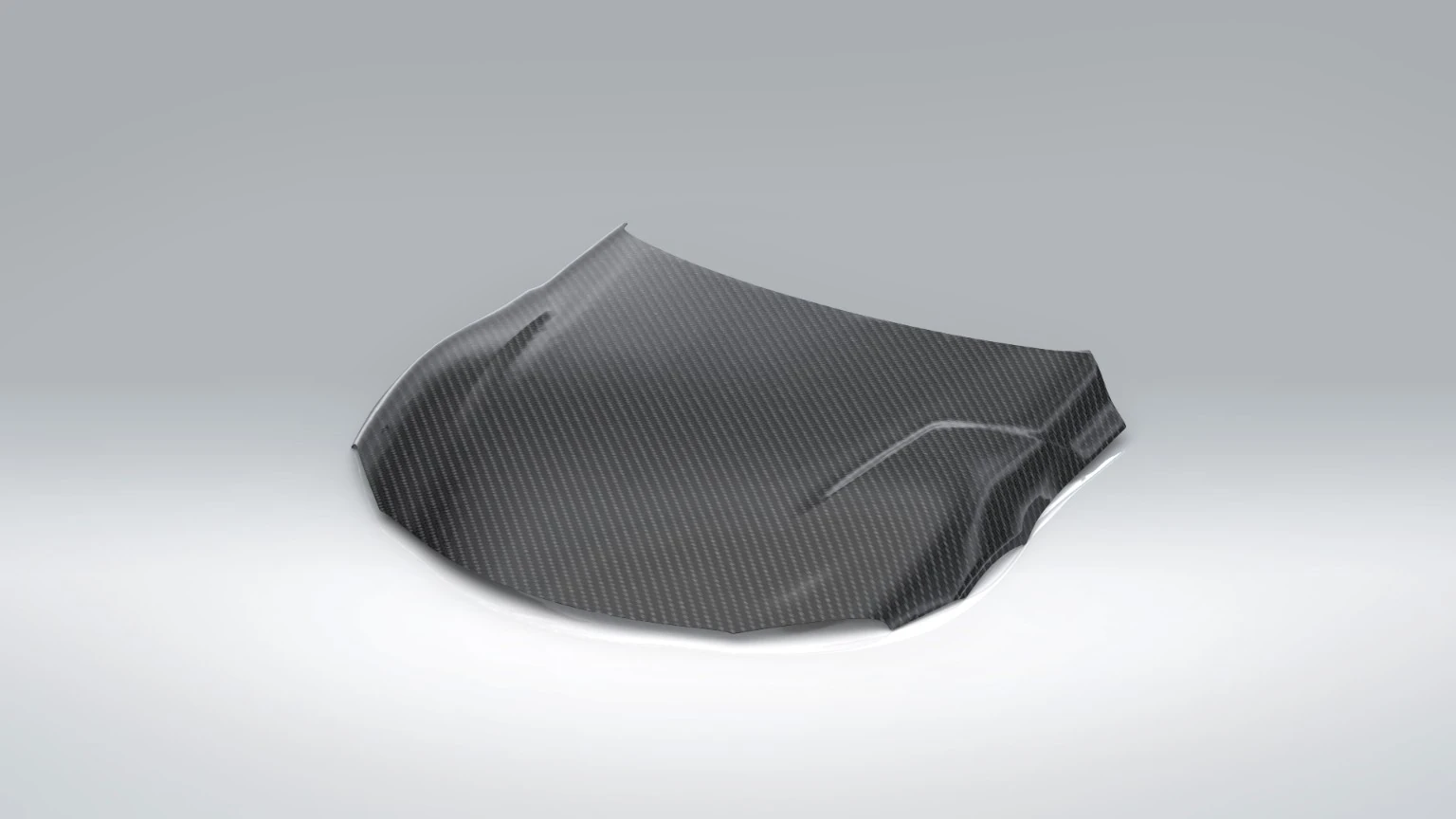
Custom exterior components and performance parts developed around vehicle-interface recovery, high-quality surface continuity, controlled fit-up, fastening, airflow and thermal constraints, manufacturability, and finish-critical geometry.

Surface continuityVehicle fit-upPerformance
PF-07Biomechanical products

Foot Orthotics + Body-Fit Geometry

Design mandateTranslate variable human geometry into controlled surfaces, thickness, interfaces, and production intent.

Fit-driven freeform products translated into controlled CAD using surface reconstruction, offsets, variable thickness, blend strategy, interface definition, and manufacturing-aware geometry for individualized physical use.

Freeform CADFit interfacesManufacturing
PF-08Consumer product systems

Modular Track + Interlocking Products

Design mandateCreate repeatable interlocks and a scalable part family across many user-built configurations.

Large modular assemblies developed around repeatable interlocks, smooth geometric transitions, nesting, stiffness, scalable part families, configuration control, and reliable user assembly across multiple layouts.

Large assembliesInterlocksProduct platform

Development method

Clear decisions. Fast learning. Fewer expensive surprises.

The sequence changes with product maturity and risk. The discipline does not: define the right problem, compare real alternatives, test the dangerous assumptions, and preserve the reasoning behind the design.

See the complete development process
  1. 01

    Define

    User, business, technical, and manufacturing requirements.

  2. 02

    Diagnose

    Physics, interfaces, risks, unknowns, and the fastest useful learning.

  3. 03

    Generate

    Multiple concepts, first-order calculations, and transparent tradeoffs.

  4. 04

    Develop

    CAD, materials, tolerances, components, prototypes, and documentation.

  5. 05

    Validate

    Risk-focused tests, design correction, and requirements-based verification.

  6. 06

    Release

    Drawings, BOM, suppliers, inspection, pilot builds, and change control.

Engineering Lab / Eight live tools

Make the first calculation visible.

Transparent engineering calculators for fits, joints, beams, linkages, shafts, springs, and tolerance decisions—each with an explicit model boundary and live diagram.

Role + engagement fit

Where I can create the most leverage.

Strong fit

  • Senior, staff, or technical-lead role with meaningful product ownership
  • New product definition, mechanical architecture, or complex development
  • Industrial-design-to-engineering or prototype-to-production transition
  • Defined consulting workstream requiring direct senior execution

Usually not a fit

  • Brand or styling work without engineering scope
  • Source geometry without clear ownership or authorization
  • Requests for unpaid detailed design work
  • Programs without realistic development resources

Role or product inquiry

Bring me the product, the program, or the difficult decision.

For employment conversations or consulting work, share the non-confidential context, current stage, and the ownership you need. I will respond directly.